Flashing
The metal and membrane that seal the skylight curb to the roof. Rusted, lifted or poorly lapped flashing lets water run inside the curb.
A skylight is a hole in the roof by design, so it's one of the first places water finds a way in. Work out whether it's a leak or condensation, get the flashing or seal fixed, and repair the light well and ceiling below.
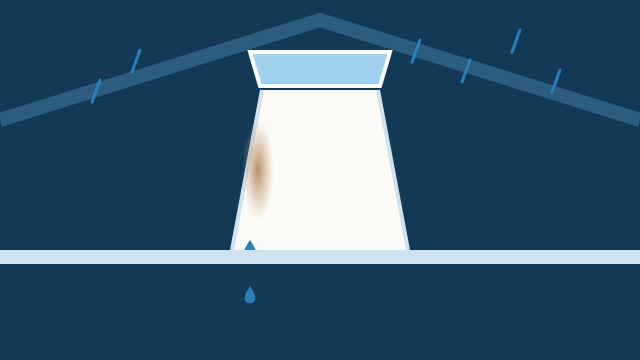
Many skylight "leaks" in Diamond Bar turn out to be condensation, and the fix is completely different. Warm, humid indoor air hits the cold glass on a winter morning and drips, sometimes enough to stain the drywall below.
| Clue | Likely a leak | Likely condensation |
|---|---|---|
| When it happens | During or after rain | Cool mornings, no rain needed |
| Where it shows | One corner or side of the well | Evenly along the frame, drips straight down |
| The glass | Dry inside | Beaded with water on the room side |
| The stain | Streaks down the shaft wall | Spots or rings right under the frame |
Wipe the glass and frame completely dry on a dry evening. If it's wet again by the next cool morning with no rain, it's condensation.
The metal and membrane that seal the skylight curb to the roof. Rusted, lifted or poorly lapped flashing lets water run inside the curb.
Cracked or slipped tiles next to the skylight let wind-driven rain reach underlayment that's often worn beneath them.
Sun-baked gaskets and sealants crack, especially on south- and west-facing roof slopes that bake all summer.
Acrylic domes get brittle and craze with age; a falling branch or hail can crack them.
Leaves and debris piled on the uphill side of the curb dam water against it until it finds a way in.
Humid indoor air on cold glass. More common with older skylights and over bathrooms and kitchens.
Leak or condensation, from the stain pattern, the timing, readings in the well and a look at the roof around the curb.
Flashing, tiles, seal or unit replacement coordinated with the right trade. Temporary protection first if rain is coming.
Wet insulation around the shaft removed and the framing dried to normal readings.
Damaged drywall replaced, corners re-taped with corner bead where needed.
Texture matched in the well and on the ceiling, then the shaft and ceiling repainted.
Condensation stains on the drywall still need the right primer before repainting; see ceiling water stain repair.
Leaks, condensation and repairs around skylights.
Check the timing. A leak shows up during or after rain, usually at one corner or along one side, and often stains the light well unevenly. Condensation shows up on cool mornings, especially after showers or cooking, beads evenly across the glass or frame, and drips straight down. Wiping the glass dry and checking again the next cool morning with no rain in the forecast is a quick test.
Often, yes. Many skylight leaks come from the flashing, the roofing around it, or a failed seal, not the skylight itself. A cracked dome, a failed insulated-glass seal that's fogged inside, or a frame that's warped usually means replacement makes more sense.
Wind pushes rain sideways and uphill, under tiles and past flashing laps that shed normal rain just fine. On tile roofs, tiles around the skylight that have slipped or cracked, often after Santa Ana winds, are a common cause.
Yes. The light well is drywall like the rest of the ceiling, often with tight corners and a texture that's hard to match. Once the source is fixed and it's dry, damaged sections are replaced, the corners re-taped and the whole well refinished so it reads as one surface.
You can reduce it. Running bathroom and kitchen fans, keeping indoor humidity down in winter, and making sure the light well is insulated all help. Older single-pane or poorly insulated skylights condense more; a replacement with better glazing is the long-term fix.
Sudden damage from a storm opening may be; a seal or flashing that wore out over time often isn't. See how California policies treat water damage.